
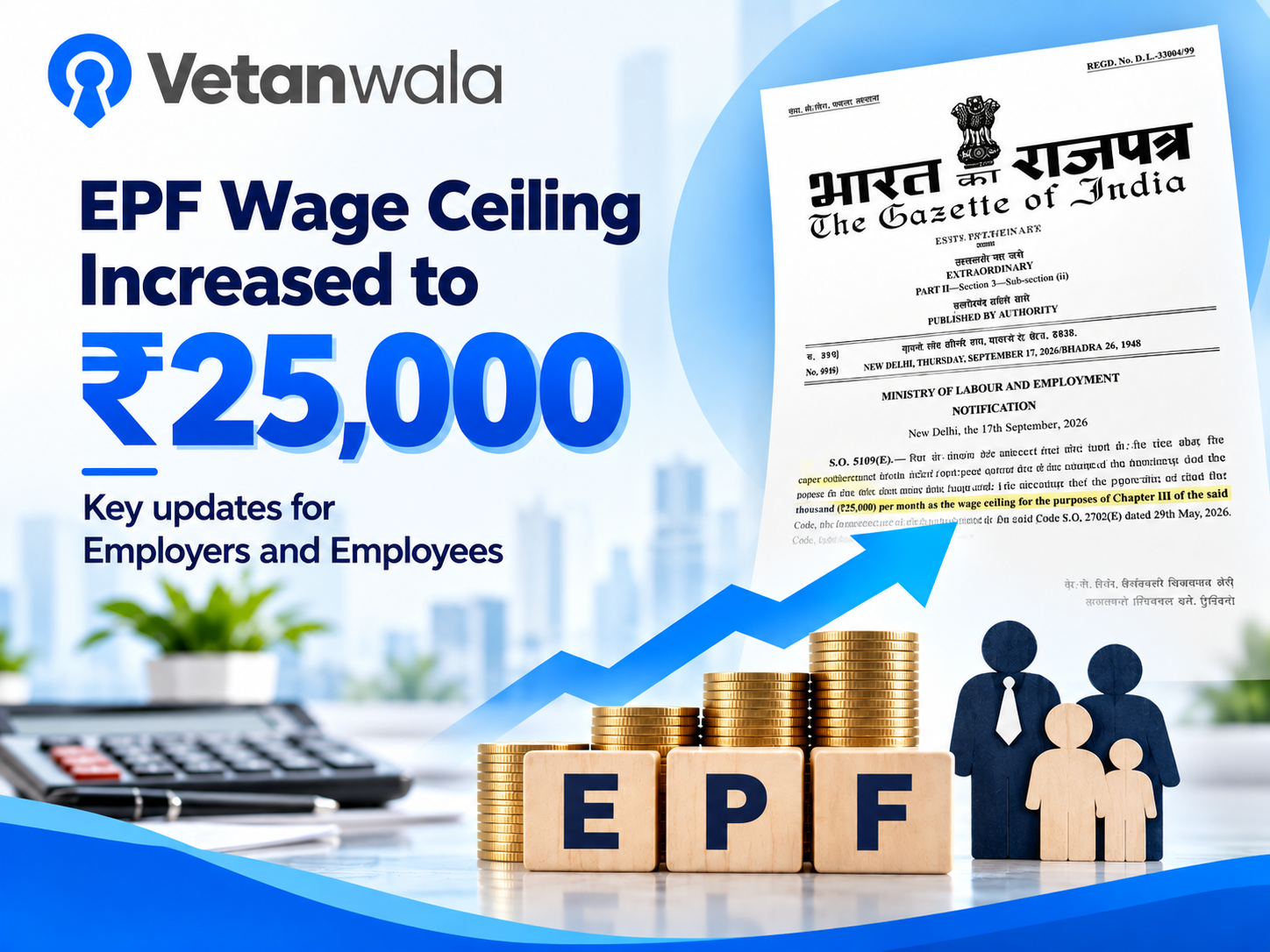
The Government of India has notified ₹25,000 per month as the wage ceiling for the purposes of Chapter III of... Read more
New Tax Regime 2026–27: Income Tax Slabs, Benefits
Understand the New Tax Regime for FY 2025–26 / AY 2026–27, including revised income-tax slabs, the Section 87A rebate, key considerations for salaried employees, and how efficient payroll management can simplify tax calculations.
Understanding the New Tax Regime
India's New Tax Regime is designed to provide a simplified income-tax structure with comparatively lower slab rates while allowing fewer deductions and exemptions than the Old Tax Regime. The New Tax Regime is the default tax regime, although eligible taxpayers can choose the Old Tax Regime subject to applicable conditions. Income Tax Department
For Assessment Year 2026–27, taxpayers should understand the applicable slabs and rebate provisions while planning their taxes and salary structure.
No Income Tax Up to ₹12 Lakh?
One of the most significant features for eligible resident individual taxpayers is the enhanced Section 87A rebate.
Under the New Tax Regime, the maximum rebate under Section 87A has been increased to ₹60,000 for total income up to ₹12 lakh for AY 2026–27. This can reduce the income-tax liability to nil for eligible taxpayers whose qualifying total income does not exceed ₹12 lakh.
It is important to distinguish the ₹4 lakh basic nil-rate slab from the ₹12 lakh rebate threshold. Income above ₹4 lakh is still subject to slab-based calculation; the Section 87A rebate is what can eliminate the resulting tax liability for eligible taxpayers within the specified limit.
Why the New Tax Regime Matters for Salaried Employees
For salaried employees, changes in tax slabs directly influence TDS calculations, monthly take-home salary and annual tax planning.
The New Tax Regime generally provides lower tax rates across wider income bands but permits fewer deductions and exemptions compared with the Old Tax Regime. Therefore, employees should consider their salary structure and eligible deductions before deciding which permitted regime suits their circumstances.
For employers, accurate employee tax declarations and payroll configuration are equally important because these details influence monthly TDS computation and payroll processing.
New Tax Regime vs Old Tax Regime
The two regimes follow different approaches.
Under the Old Tax Regime, taxpayers may claim various eligible exemptions and deductions, subject to the applicable provisions. The New Tax Regime, meanwhile, uses lower or more graduated slab rates while providing comparatively fewer deductions and exemptions.
For non-business cases, eligible taxpayers can exercise their tax-regime option through the income-tax return as prescribed. Different conditions apply to taxpayers with income from business or profession, including requirements concerning Form 10-IEA.
What Should Employers and HR Teams Do?
Changes in income-tax rules make accurate payroll configuration increasingly important. Employers and HR teams should keep employee tax-regime selections and declarations updated, configure applicable tax slabs correctly, calculate TDS based on current rules, maintain salary and deduction records, and provide employees with accurate payroll and tax information.
Manual tax calculations across a large workforce can become time-consuming and increase the possibility of errors. A centralized HRMS and payroll platform can make these processes easier to manage.
Simplify Payroll & Tax Management with VetanWala HRMS
VetanWala HRMS helps organizations bring employee management, attendance, leave, salary and payroll processes together on a centralized platform.
With configurable payroll and salary components, businesses can streamline monthly payroll processing and maintain organized employee financial records while adapting their processes to changing statutory requirements.
From attendance and leave management to payroll administration, VetanWala helps HR teams manage the complete employee lifecycle through a unified digital platform.
Conclusion
The New Tax Regime for AY 2026–27 provides a broader slab structure starting with Nil tax up to ₹4 lakh, followed by rates ranging from 5% to 30%. Eligible taxpayers can also benefit from a Section 87A rebate of up to ₹60,000 where total income does not exceed ₹12 lakh.
For employees, understanding the applicable tax regime is essential for better tax planning. For employers, keeping payroll systems aligned with current tax provisions helps support accurate TDS and salary processing.
Related Blogs
More Latest News and Blog

Payroll involves much more than calculating salaries. From attendance and leave adjustments to deductions, statutory components, payslips and employee records,... Read more