
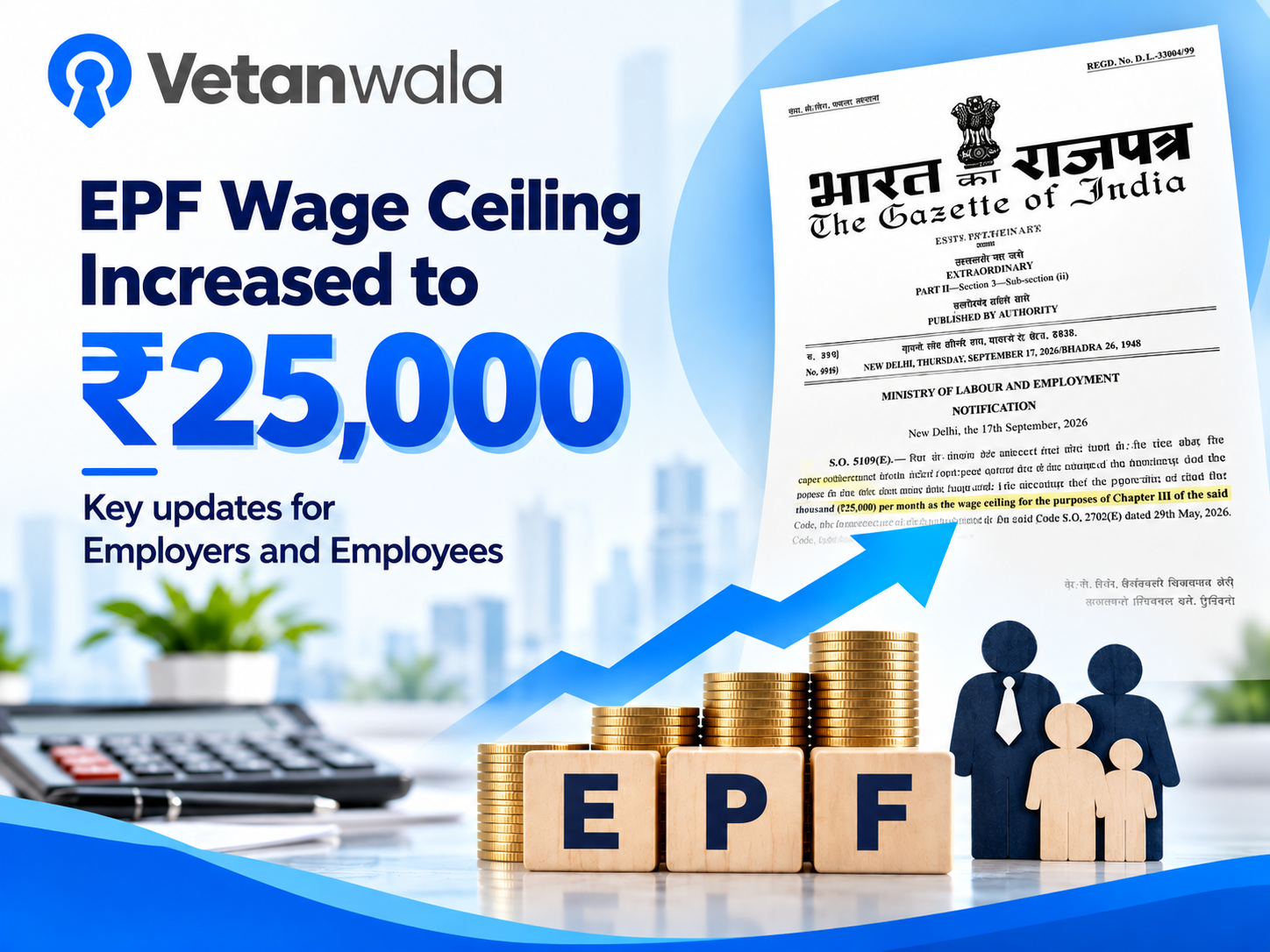
The Government of India has notified ₹25,000 per month as the wage ceiling for the purposes of Chapter III of... Read more
7 Benefits of Automating Payroll with an HRMS
Payroll involves much more than calculating salaries. From attendance and leave adjustments to deductions, statutory components, payslips and employee records, every payroll cycle requires accuracy. Discover 7 key benefits of automating payroll with an HRMSand how it can help businesses save time, reduce manual work and simplify workforce management.
What Is Payroll Automation?
Payroll automation is the process of using software to manage repetitive payroll activities with minimal manual intervention. Instead of maintaining separate spreadsheets for attendance, leave, salary components and deductions, an HRMS (Human Resource Management System) brings these processes together on a centralized platform.
An integrated HRMS can use employee attendance, leave, salary structures and other payroll inputs to support faster and more consistent monthly payroll processing.
For growing businesses, this means less time spent on repetitive calculations and more time available for strategic HR activities.
1. Reduces Manual Payroll Calculations
Traditional payroll processing often requires HR teams to collect data from multiple sources and manually calculate working days, leave deductions, salary components and other adjustments.
Payroll automation reduces repetitive calculations by connecting employee information directly with the payroll process.
This helps HR teams spend less time preparing spreadsheets, checking formulas and transferring data between different systems.
2. Improves Payroll Accuracy
Even a small payroll error can result in an incorrect salary, deduction or payslip.
An HRMS allows organizations to define salary structures and payroll rules within the system. Once configured correctly, these rules can be consistently applied during payroll processing.
This helps minimize common human errors such as incorrect data entry, duplicate calculations and missed adjustments.
3. Connects Attendance, Leave and Payroll
One of the biggest advantages of an integrated HRMS is the ability to bring attendance, leave and payroll together.
Employee attendance information such as present days, absences, approved leave, holidays and week offs can be maintained within the same ecosystem.
Instead of manually collecting attendance data at the end of every month, HR teams can use centralized records while preparing payroll.
This creates a smoother flow:
Attendance → Leave → Salary Calculation → Payroll → Payslip
4. Saves Time for HR and Payroll Teams
Payroll is a recurring activity, which means even small inefficiencies are repeated every month.
Automation can significantly reduce the administrative effort involved in collecting payroll inputs, verifying employee records, calculating salaries and preparing payslips.
As the number of employees increases, this becomes even more valuable. HR teams can manage a larger workforce without increasing the same level of repetitive payroll work.
5. Simplifies Salary Structure Management
Employee salaries can include several components, such as:
- Basic Salary
- House Rent Allowance (HRA)
- Other Allowances
- Incentives
- Bonuses
- Deductions
- EPF
- ESIC
- TDS and other applicable components
An HRMS provides a structured way to configure and maintain these salary components.
When an employee's salary structure changes, authorized HR users can update the relevant information centrally instead of maintaining multiple payroll sheets.
6. Provides Better Payroll Records and Transparency
Employees frequently need information about their salary, deductions and payslips.
A centralized HRMS makes payroll information easier to organize and retrieve. Depending on the system's employee self-service features, employees can access relevant salary information and payslips without repeatedly contacting the HR department.
For HR teams, centralized payroll records also make it easier to review historical salary information and resolve employee queries.
7. Supports Business Growth and Scalability
Manual payroll processes may work for a very small team, but they become increasingly difficult to manage as the organization grows.
More employees mean more attendance records, leave transactions, salary structures, deductions and payroll calculations.
A scalable HRMS provides businesses with a structured platform that can support an expanding workforce without relying on increasingly complex spreadsheets and disconnected processes.
Automate Payroll with VetanWala HRMS
VetanWala HRMS brings essential HR activities together through a centralized digital platform.
Organizations can manage employee information, attendance, shifts, leave, holidays, salary components and payroll-related processes in one place. By connecting these functions, VetanWala helps HR teams reduce repetitive administrative work and maintain more organized payroll operations.
Whether you manage a small team or a growing workforce, a centralized HRMS can make everyday HR and payroll activities easier to manage.
Conclusion
Payroll automation is not simply about processing salaries faster. It creates a connected HR ecosystem where employee data can flow from attendance and leave management to payroll processing and salary records.
The seven major benefits are reduced manual work, improved accuracy, integrated attendance and leave, time savings, structured salary management, better payroll transparency and greater scalability.
With the right HRMS, businesses can move away from complicated spreadsheets and build a more efficient, organized and employee-friendly payroll process.
VetanWala HRMS – Simplifying HR, Attendance and Payroll Management.
Related Blogs
More Latest News and Blog
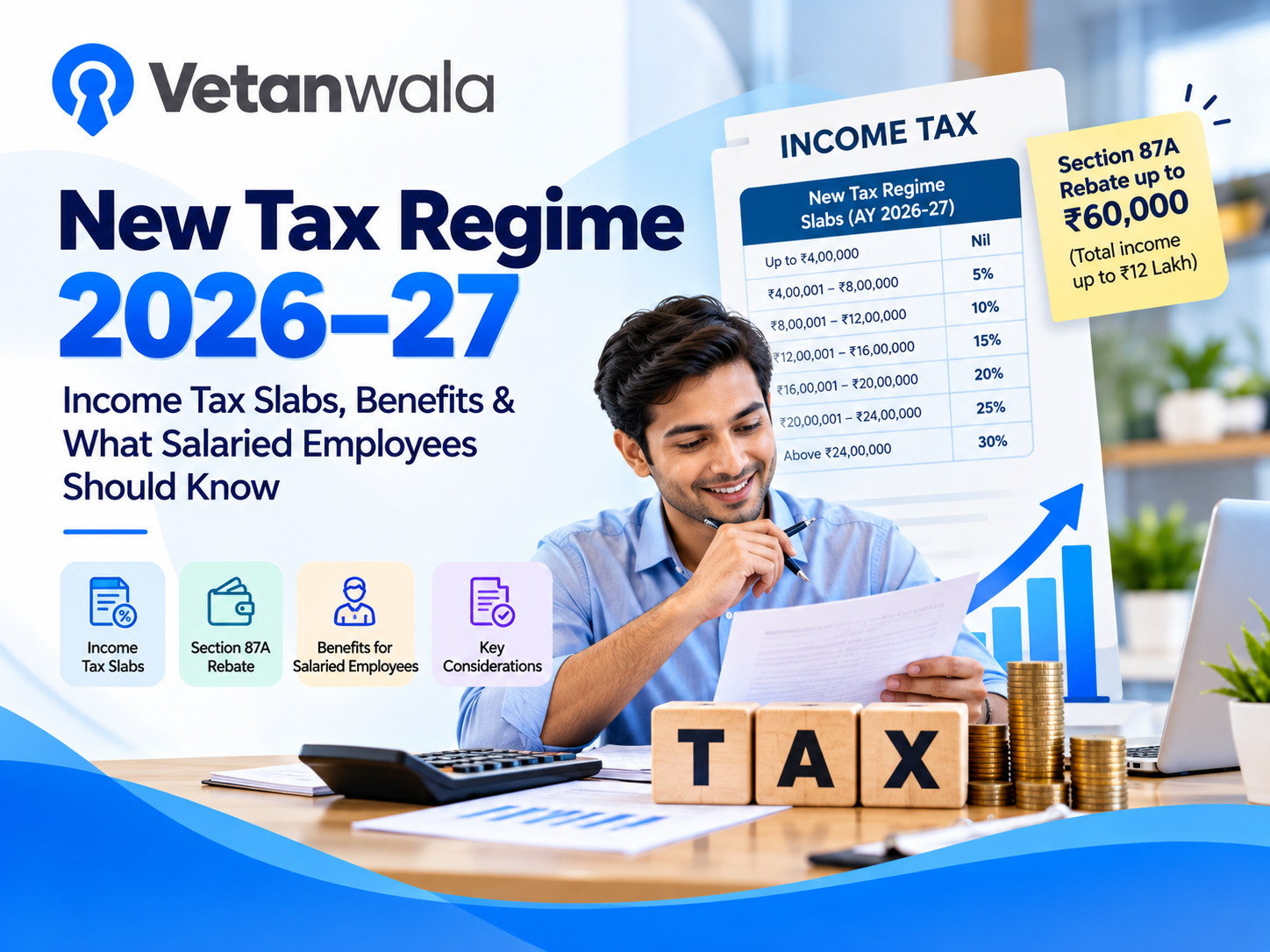
Understand the New Tax Regime for FY 2025–26 / AY 2026–27, including revised income-tax slabs, the Section 87A rebate, key... Read more